Story and Photos by Jordan Albus
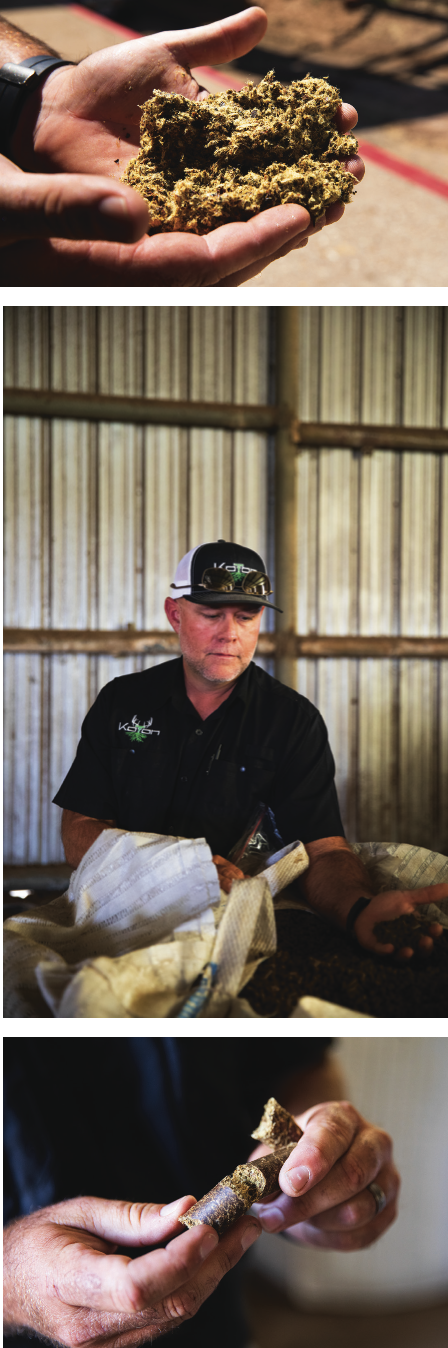 Within the walls of KoTon Feed & Supply, there are years of research, passion, and determination to create a quality product that serves not only its consumers but also the community. Each bag of livestock and deer feed tells a story, one of a group of brothers whose goal is to serve others and the agricultural industry. KoTon (pronounced cotton) Feed & Supply was born out of an experiment with cottonseed – one that, for the Kerby brothers, paid off.
Landon Kerby is the co-owner and co-founder of KoTon Feed & Supply. He, along with his brothers Rhett and Gunner, started KerTec, LLC., an environmental reclamation company based in Shallowater, Texas, in 2014. KerTec is the sister company of KoTon. At KerTec, the Kerbys use hydromulch, a product that helps stabilize and revegetate soils. As they began formulating their custom product, they discovered the standard ingredient base used in most hydromulch products nationwide was not ideal for stabilizing soil and improving soil health.
“The products on the market right now are paper-based and wood-based,” Kerby said. “My brothers and I were talking about all the things that we ship into Lubbock, because it’s the land of cotton. It didn’t make sense for us to bring in paper or wood as a hydromulch media to put our grass seed in and spray it out on the ground for remediating soil.”
Kerby said that over time, Rhett began testing cottonseed meal from a facility in Brownfield, Texas, to assess its potential to replace the typical paper and wood hydromulch bases. After seeing success with the implementation of the cottonseed, the brothers later purchased the same cottonseed processing facility in 2021, and KoTon was born.
KoTon’s original purpose was to produce hydromulch. However, the Brownfield facility was also equipped to produce cattle range cubes, so KoTon began producing those to diversify the business. After learning that deer also love cottonseed byproducts in their feed, they expanded to include them as well. Now, along with hydromulch, KoTon produces feed from cottonseed for cattle, deer, sheep, and goats. They have even found that cottonseed oil works as a dust suppressant, so the company now manufactures cottonseed oil-based dust control products.
“It’s the main ingredient,” Kerby said. “Basically, everything we do revolves around cottonseed.”
The Benefits/The Product
As time went on, Kerby and his brothers learned much more about how their process and the use of cottonseed as a feed ingredient offer nutritional benefits for livestock and deer.
“Whenever the meal comes out of our plant, it’s about 24% protein and 6.5% fat. Well, the part I didn’t understand was bypass fats, meaning passing the rumen and going straight to the small intestine. They are equivalent to about 18% fat. Fat equals energy,” Kerby explained. “That’s where we beat most competitors – the energy in our feed. Customers know cottonseed is good for these products, but they may not know why – but that’s why. It’s the energy.”
While other companies use cottonseed in livestock feed, KoTon remains a unique competitor in that market, not only for the breadth of feed offerings for other animals but also for its process of incorporating cottonseed into its feed. This process is called extrusion. Extrusion eliminates the step of delinting the cottonseed and instead applies high heat, delivering multiple benefits such as reduced production time and easier digestion for the animals. Kerby said that gossypol, found in cottonseed, is often what turns people away from using cottonseed-based feed because, when not fed in moderation, it can sterilize male livestock. He said that this unique extrusion process heavily reduces it.
“Cotton is a really cool plant, and a lot of people don’t realize its value,” Kerby explained. “You can take the lint, put it in shirts, put it in all kinds of different products, and then we can take that seed that used to be fed straight to animals (and fed in moderation) because of gossypol. We can now reduce that gossypol. We’ll use cottonseed oil as feed fats for feed yards, dairies, and different industries that can also use that oil. Then we can take the cottonseed meal and make it into feed cubes.”
Kerby explained that one of the challenges in this business is communicating the importance of prioritizing product quality over price. He said he has found that educating consumers about his products’ benefits has been important.
“I think, sometimes, ranchers and farmers are looking for the cheapest price, and sadly, they may not look at the quality,” Kerby said. “So, I’m trying to figure out how to bridge the gap to educate them to understand that for a little bit more money, you can have a product that has more energy, more protein, more fiber, increased milk production, increased fawning, weaning weights, and quality of the animal. There are a lot of health benefits to cottonseed.”
While the company has expanded its production from hydromulch materials to animal feed, there remains an opportunity to expand even further. KoTon is in the process of incorporating other items into its products, such as probiotics, prebiotics, and more, that are in demand in the industry.
The Community
Not only does KoTon provide a variety of products for livestock and deer, but it also focuses on ensuring the community benefits from its production. Kerby, being from a small town, sees the value in supporting rural economies, from hiring locally to supporting local businesses. One way KoTon does this is by sourcing cottonseed for its products from the seed local gins have available. Roughly 15 to 20% of producers’ income comes from cottonseed, so purchasing available seed supports not only local gins but local farmers, too.
“It only makes sense for us to find cottonseed as close as we can to keep the freight down. We’ve partnered with a couple of gins within 20 miles of here, so that’s where we sourced a lot of our cottonseed, but a lot of those guys source a certain amount of their seed to other places, so we’ll use commodity brokers, or local gins,” Kerby said. “I buy the seed, I turn it into a feed, and everything, converting it into a feed product to go straight to a cow within, you know, most of the time 20 to 30 miles from where it was growing. I don’t know very many other products that take cotton directly to the consumer within 30 miles of where it’s grown.”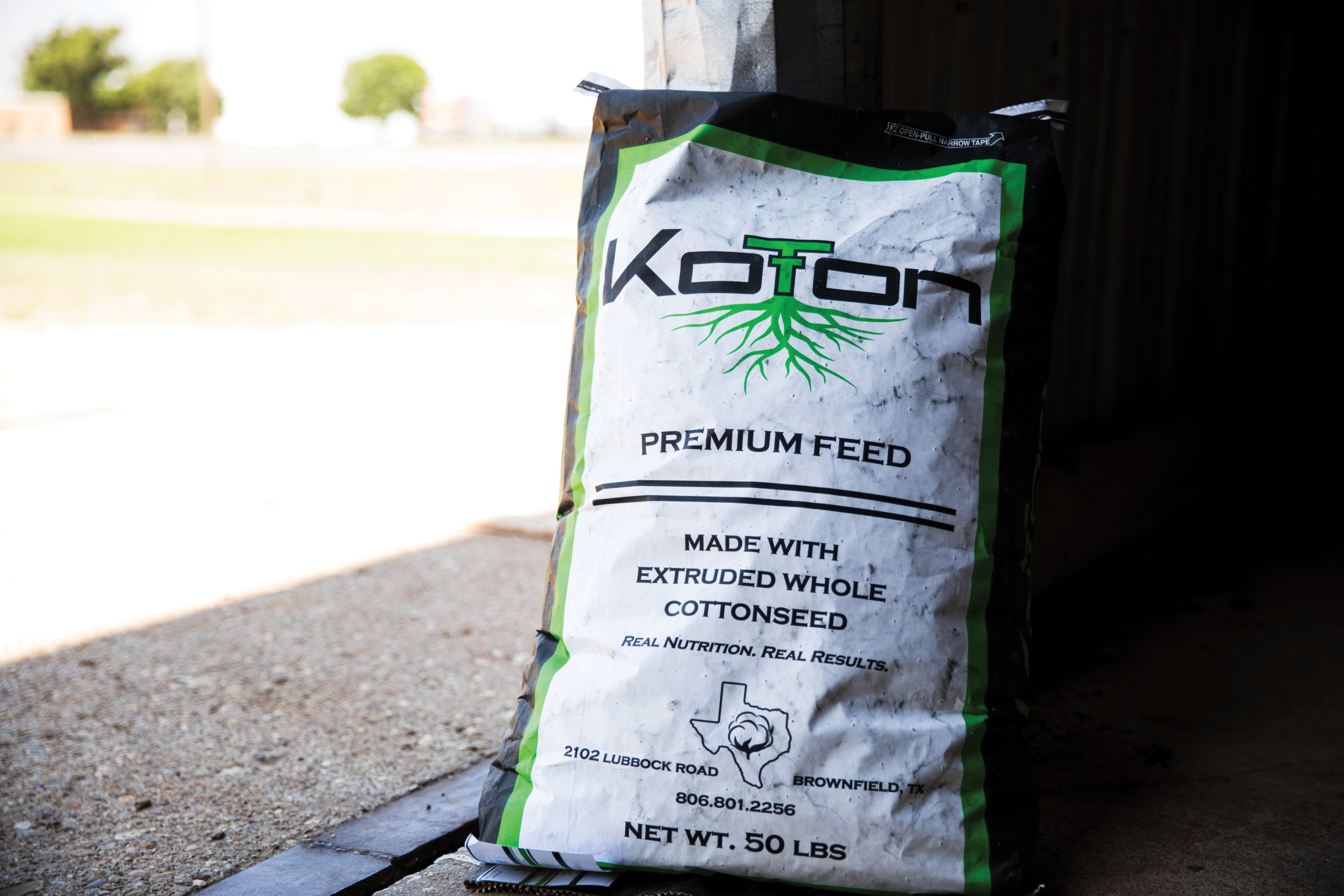
Kerby has always worked and been involved with agriculture. He graduated with an agronomy degree from Texas Tech University and then spent 15 years working with the USDA Natural Resources Conservation Service. During that time, he began KerTec with his brothers and, of course, later on, KoTon. His experience in the livestock industry comes from his time raising sheep, goats, and cattle. He said that it is from these avenues that he has been motivated to continue serving those in the industry.
“I get to work with people that I enjoy working with, which is agricultural leaders,” Kerby said proudly. “I love the ag industry. I’ve worked in the industry for so long. They’re salt-of-the-earth people. Ag leaders, ranchers, and farmers, those are the guys I get to work with daily. Those people make me better.”
As the years go on, KoTon and the Kerby family will continue to tell the story of how innovation, with the right determination behind it, can work across multiple industries, from cottonseed to livestock feed and beyond.