

October 19, 2026
The Week Ahead
- Cotton is heading into another week with plenty of outside influences to watch, even as prices struggle to move much beyond 80 cents. We’re watching the Fed, a commodity sell-off, and harvest progress.
- The Fed’s October 28 meeting is shaping up to be an interesting one. Another rate hike this month still looks unlikely, but last week’s inflation readings have kept it on the table. A surprise hike could give the dollar another boost and put additional pressure on cotton. With a lighter economic calendar this week, movements in crude oil and outside markets could have a bigger influence.
- Speculative selling across agriculture is still a concern, particularly with funds holding sizable long positions in several markets. Much of the recent selling has been concentrated in corn, but there is still room for additional selling across the broader commodity complex. Cotton has already absorbed its share of pressure, and further weakness in other agricultural markets could make it hard to build momentum.
- Harvest progress and demand will also be important to watch as more of the U.S. crop makes its way to market. Improving weather should help growers make progress, but quality concerns across parts of the Cotton Belt are not going away. On the demand side, lower prices have attracted some interest, although the market still needs more consistent buying to support a recovery. Monday’s crop progress report and Thursday’s export sales report should offer another look at both sides of the equation.
Market Recap
- Cotton had another relatively quiet week, with December futures losing 54 points to settle right at 80.00 cents per pound. Prices spent much of the week hovering around the 80-cent mark, although Wednesday brought a brief rally that pushed December as high as 82.25 before giving back most of those gains. Friday brought an interesting finish, with futures settling exactly at the 80-cent strike as November options expired. These lower levels seem to offer some support, but there’s not much enthusiasm to push prices higher just yet.
- Trading activity told a different story than last week’s relatively quiet price action. Cotton open interest reached record levels as traders shifted positions out of December and into deferred contracts. The December/March spread also widened, adding another consideration as the December contract gets closer to expiration. On a more encouraging note, speculative selling slowed after several weeks of pressure. However, managed money is still holding a sizable net long position, and the market has yet to find much momentum in either direction.
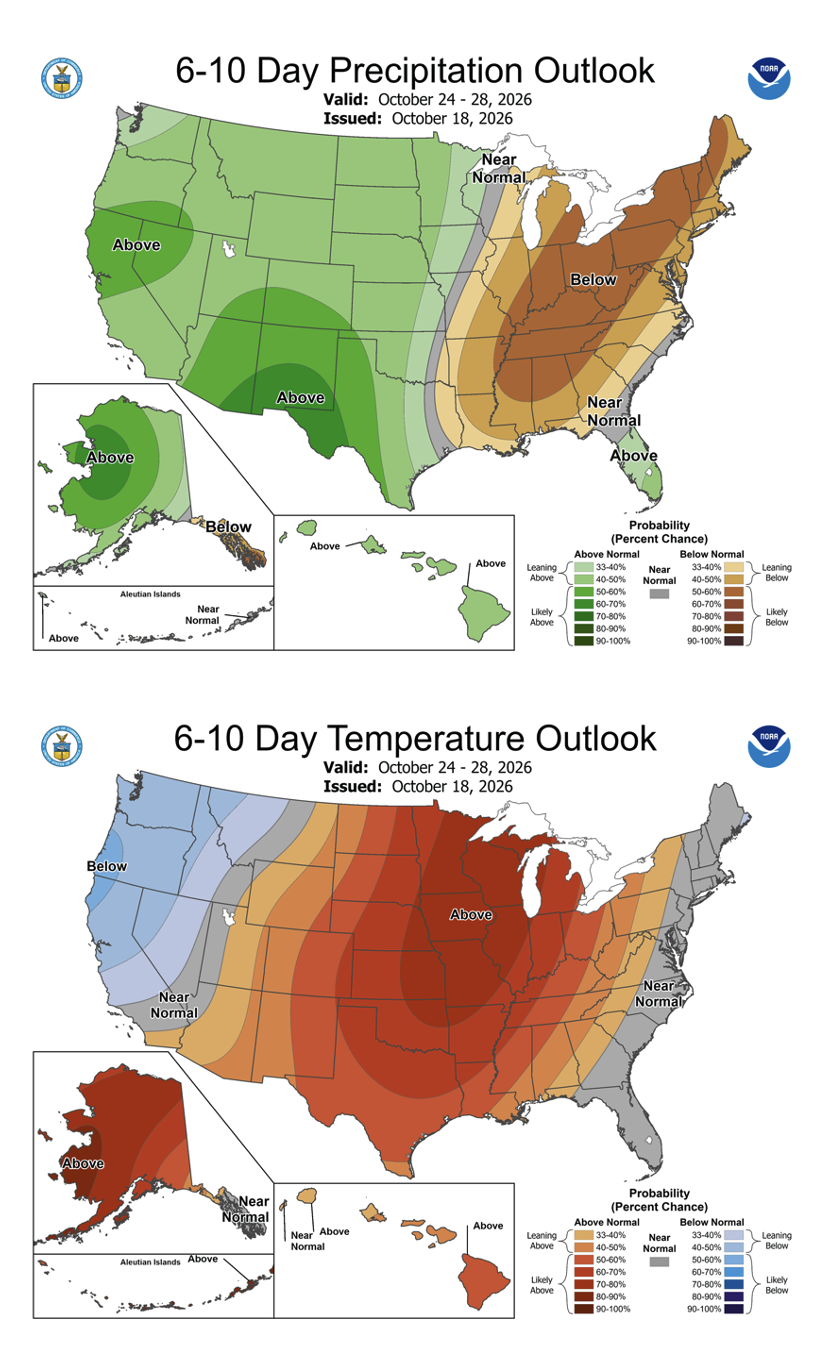
- Harvest is making progress across the Cotton Belt, but recent weather has raised more questions about quality. The U.S. crop was 31% harvested at the start of last week, slightly ahead of the five-year average. Additional rain across West Texas and Oklahoma slowed things down in some areas, while the first freeze of the season reached parts of the High Plains over the weekend. Early classing results from West Texas are raising some quality concerns, although it’s still early in the season and we’ll have a better picture as more cotton is classed.
- Meanwhile, drier weather across the Delta and Southeast should help growers get back into the fields. At this point, getting the crop out and seeing how quality holds up is becoming increasingly important.
Economic and Policy Outlook
- Inflation and energy prices were back in focus last week, adding to an already complicated macro picture. Consumer prices rose 0.6% in September and 3.7% year over year, while producer prices jumped 1.3%, the largest monthly increase in more than four years. Retail sales increased 0.8%, but much of that strength came from higher gasoline prices rather than stronger consumer spending. The hotter inflation readings pushed the dollar higher Wednesday, taking some of the steam out of cotton’s rally.
- With inflation heating up and consumer spending showing signs of slowing, the Fed has a tough decision ahead. Another rate hike is not out of the question, although December still looks more likely than October. Higher interest rates and a stronger dollar could create additional pressure for cotton, while rising energy costs are another concern for consumers and textile demand.
- USDA announced two new initiatives under the Great American Cotton Plan last week, aimed at improving risk management and creating more demand for U.S. cotton. The changes include expanded crop insurance options for growers and a new trade program designed to encourage purchases of U.S. cotton. Both are encouraging developments, although the details are still being worked out and any potential benefits are likely further down the road.
Supply and Demand Overview
- Upland sales slowed a bit this week, totaling 146,900 bales. Costa Rica led purchases by a wide margin, followed by India and Pakistan. Sales were below the recent average, but buyers are still showing some interest at these lower prices. After a few encouraging weeks, it would be nice to see that momentum pick back up.
- Shipments also took a step back, totaling 140,600 bales. Vietnam was the top destination, followed by India and Bangladesh. The pace is still slower than needed, and while it is not time to get too concerned just yet, exports will need to pick up considerably in the coming months.
- Pima had a better week, with sales reaching 10,000 bales and shipments improving to 10,400 bales. India accounted for the bulk of both sales and exports, providing a welcome improvement after several quieter weeks.
- There was also some additional interest in next year’s crop, with 7,200 bales booked for 2027/28, primarily to Costa Rica. The recent buying interest has been encouraging, but the bigger question is whether it can translate into more consistent sales and stronger shipments. There is still plenty of work to do on the demand side.
The Seam®
- As of Friday afternoon, grower offers totaled 12,524 bales. The past week 4,139 bales traded on the G2B platform received an average price of 74.83 cents per pound. The average loan redemption rate (LRR) was 57.89, bringing the average premium over the LRR to 16.93 cents per pound.
- Note: The Loan Redemption Rate (LRR) is the loan rate minus the current Loan Deficiency Payment (LDP).