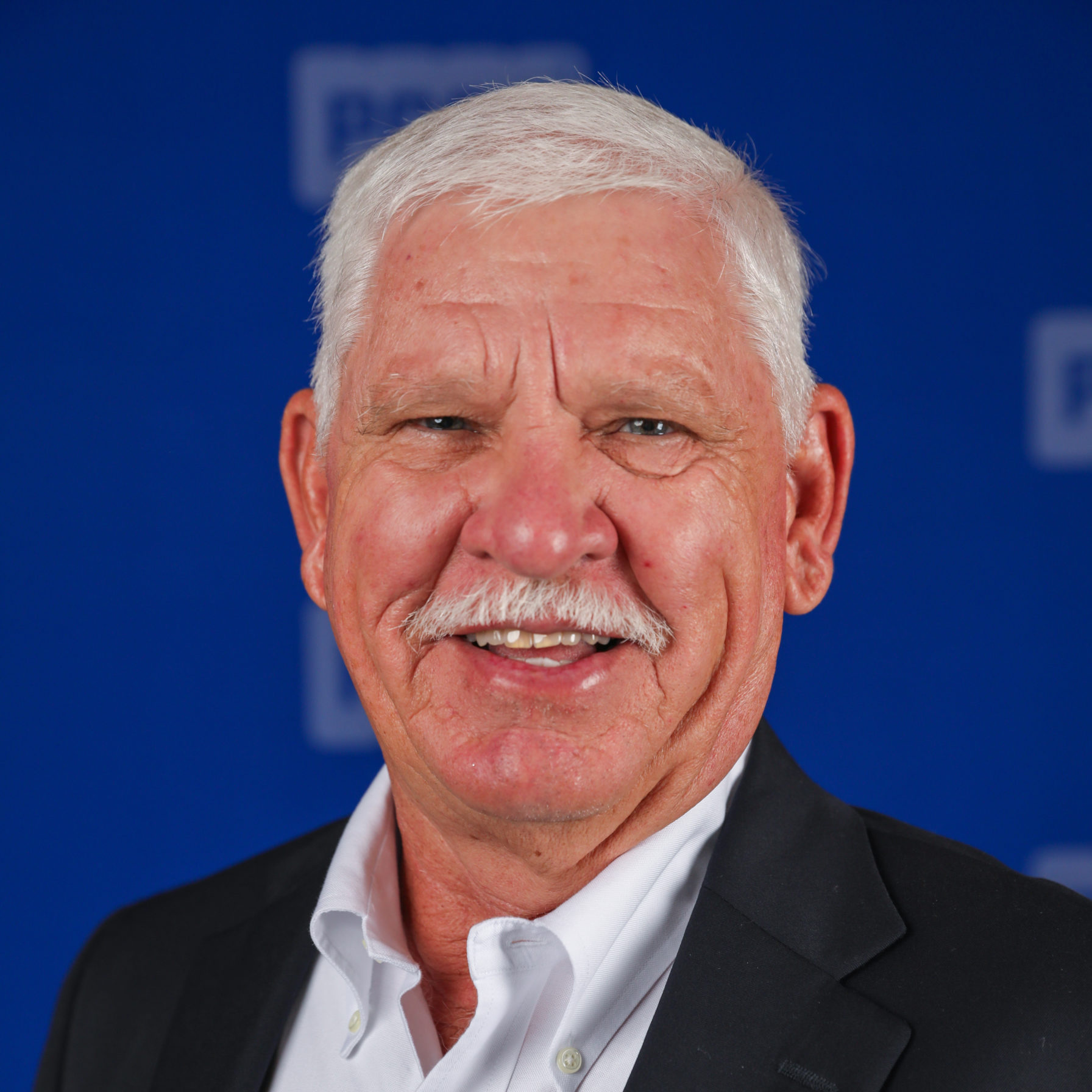
Q&A with Marvin Beyer Jr., Chairman of Cotton Incorporated
Field & Fiber | Summer/Fall 2026
The cotton industry is no stranger to change. But today’s challenges, from global market pressures to increasing competition from synthetic fibers and shifting consumer expectations, are reshaping how the industry thinks about creating demand and securing cotton’s future. Meeting that moment requires fresh ideas, strong leadership and a willingness to work together across every part of the cotton value chain.
As a Texas cotton producer, Board Member (District 11) for Plains Cotton Cooperative Association and Chairman of the Board of Cotton Incorporated, Marvin Beyer has a unique perspective on both the opportunities and responsibilities that come with leading through change. While the challenges facing producers remain real, Beyer believes that the industry’s greatest strength lies in its ability to adapt, innovate and stay focused on what matters most: building demand and profitability of U.S. cotton.
That collaborative mindset – summed up by a common PCCA phrase We’re Stronger Together – is reflected throughout this conversation. In the following Q&A, Beyer reflects on the opportunities ahead and the work being done to position U.S. cotton for long-term success.
Please tell us about yourself.
I grew up on a farm near Taft, Texas. After graduating from Taft High School in 1974, I went to mechanics school in Uvalde, Texas, for one year at Southwest Texas State Junior College. I transferred to Texas Tech University and graduated with a degree in Ag Engineering (Mechanized Agriculture) in December 1978. 1979 was my first-year farming in partnership with my brother, Dan Beyer. We are still farming together today.
What does it mean to you to serve as chair of Cotton Incorporated?
I am excited to be the current Chairman of the Board at Cotton Incorporated. When I went into the officer rotation, I knew my time to be Chairman would come one day. I feel very blessed and grateful to be in this position. I am thankful and honored to have been given the opportunity by the grower organizations of the Southwest region, especially Plains Cotton Growers, because they have so many capable members who could have done this but let me have this opportunity.
Why is it important to be involved in the cotton industry beyond farming?
The cotton industry is full of dedicated, talented people. Our job is to grow the cotton but getting that cotton from the field onto a store shelf takes research, innovation, marketing, and expertise. Being involved in the industry is important – it gives us insight beyond the work conducted on our farms. It helps us stay connected to those efforts. It helps ensure that our (producers) voices are part of every decision. Our involvement helps make sure cotton products stay in front of the consumer and, ultimately, it keeps demand strong.
What other involvement do you have in the cotton industry?
I have been involved with South Texas Cotton and Grain Association for my entire farming career. That is our Certified Producer Organization in South Texas. I am a member of the board of directors at my local cotton gin. As a gin representative, I was elected to be an alternate director at Gulf Compress, our local co-op cotton warehouse. I was made director in 2010 at Gulf Compress, and I am now Chairman of the Board of Directors. I have been involved with PCCA through the South Texas marketing pool for many years. When the District 11 Board member retired, I was elected to the Board of Directors at PCCA and currently serve on the audit committee and the newly formed governance committee at PCCA.
How has your experience in the cotton industry shaped your approach to your leadership position at Cotton Incorporated?
The cotton industry is complex and multifaceted. There are a lot of moving parts between the field and the store shelf, and decisions in one part of the chain affect every other part. The years I’ve spent on the gin board, at Gulf Compress, with South Texas Cotton and Grain, and at PCCA have given me a wide view of how those pieces fit together. That perspective is what I try to bring to the chairman’s role at Cotton Incorporated. It helps me understand the bigger picture, ask the right questions, and make sure the producer’s voice is in every conversation, whether the topic is agronomic research, fiber quality, or what’s happening at retail. My experience has helped me prepare and stay grounded in the realities of this business.
How has consumer perception of cotton changed over the last five years?
Research shows consumers want to buy more cotton, but in some cases it can be a challenge to easily find and identify cotton products on the shelf. There are a lot of other competitive fibers that claim the benefits that cotton naturally provides. That has created some confusion in the marketplace, but it has also reinforced cotton’s opportunity. People care more than ever about what’s in their clothes and around the home, and cotton has a real advantage and story to tell as a natural fiber with clear benefits around durability and sustainability. The challenge is making sure manufacturers, brands and retailers choose cotton for their products which is where Cotton Incorporated is putting its energy right now. If cotton is not on the shelf consumers cannot buy it.
How has consumer perception impacted the work Cotton Incorporated does to research, innovate, and promote cotton products?
As growers, we know consumer perception matters because it directly impacts demand for the cotton we produce. Today’s consumers are looking for products that are natural, comfortable, durable and more sustainable and research from Cotton Incorporated’s Lifestyle Monitor continues to show strong preference for cotton over synthetic fibers. Those insights help guide where Cotton Incorporated focuses its research, innovation and promotion efforts. Investing in research on performance, biodegradability, and microplastics as well as developing innovations and promotions that keep cotton competitive and relevant in the marketplace matters more than ever.
What is the organization doing to help increase demand for cotton?
Demand is the whole ball game right now. Cotton Incorporated has consolidated its marketing division so there’s one focus and one team driving cotton’s strengths primarily to the value chain. They’ve shifted more dollars to the midstream — mills, manufacturers, brands, and retailers — because that’s where the decisions get made about what fiber ends up in a product and ultimately on the shelf or online, in front of a consumer. On top of that, Cotton Incorporated is working closely across the whole cotton industry with all organizations pulling in the same direction to meet the overall goal: more cotton on retail shelves.
What are your (or Cotton Incorporated’s) current priorities?
Three things, in my mind. First, strengthen demand for U.S. cotton and take market share back from synthetics. Second, help lower production costs and manage risks on the farm so producers have a fighting chance. Third, keep improving fiber quality so cotton stays competitive in existing product categories and opens the door to new ones. There are exciting opportunities now with the increased interest in microplastics and cotton clearly emerging as a solution in the fiber world. The focus and the alignment around priorities is sharper than it’s ever been.
Could you walk me through this period of transformation that is happening at Cotton Incorporated?
The cotton market has changed. The consumer has changed. World trade in cotton has changed. Cotton Incorporated is changing alongside these other shifts – that’s what this transformation is about. After an intensive third-party evaluation of the Program, Cotton Incorporated made some hard decisions about where producer dollars would have the most impact. We consolidated the marketing division so there’s one driving force behind cotton demand. We shifted resources into the midstream value chain because that’s where we can move the needle on getting cotton onto store shelves. Consumer marketing is still in the mix, but it is much more targeted. The whole idea is to make sure every dollar in the Program is working as hard as it can for the producer.
When did you realize / what were the signs that a change should / needed to be made?
Well, polyester has been cheaper than cotton year after year, market share has been slipping, and producers across the Cotton Belt are under significant economic stress. Times are hard on the farm, and staying optimistic is not easy. When you’re sitting on a Board that’s responsible for how producer dollars get spent, that pressure makes you ask whether what you’re doing is the best use of those dollars. The answer was that we needed to evolve. To Cotton Incorporated’s credit, they did not shy away from that hard look. We recognized the importance of sharpening our focus and evolving our approach. Taking a hard look gave us a clear picture of where to double down and where to make changes, and we acted on it.
You have been noted for leading the charge on this transformation – how would you describe your leadership approach during this time?
Cotton Incorporated are experts in this industry, and my job is to support them, ask good questions, and make sure the producer’s perspective is in every decision. I don’t see myself as the one leading the charge — the leadership team and staff are doing the work. I’m here to help guide and steward the process from the producer’s perspective.
What have some of the challenges of this transformation been?
Change is always hard, especially when you’re dealing with an industry that has so much tradition behind it. Everybody loves our Fabric of Our Lives commercials, and when you tell folks we’re spending less on consumer TV and putting more into the supply chain, that takes some explaining. There’s also the simple reality that times are tight on the farm right now — when growers are squeezed, every dollar going into the Check-off comes under more scrutiny, and that’s fair. So, a big part of the challenge has been making sure producers understand what we’re doing and why, while also demonstrating that their investment is being put to good use in ways that strengthen demand, improve cotton’s competitiveness, and advance the long-term success of the cotton industry.
What have some of the highlights of this transformation been?
One of the biggest highlights has been the process itself – bringing the team together to take an honest look at what we were doing well, where we needed to improve, and where we could have the greatest impact for the industry moving forward. That kind of reflection is not easy, but it created a stronger sense of alignment and purpose across the organization. The team walked away with a much clearer common vision and shared goal centered around strengthening demand for cotton and improving the long-term outlook for growers. There is a renewed energy behind the work right now. The staff is highly engaged, collaborative, and focused on making sure every effort, whether in research, innovation, supply chain engagement, or promotion, contributes to keeping cotton competitive and getting more cotton into the products consumers want to buy.
What has the response to these changes been so far?
It’s been a mix, and that’s fair. Some producers tell me they appreciate seeing the Program take a thoughtful look at how dollars are spent and ensuring investments are focused on the areas that can have greatest impact. Others miss the commercials, worry about the consumer effort and want to know why resources are being directed differently. Both reactions come from producers who care about this industry. What I tell folks is to give it time and watch the progress, getting more cotton onto store shelves is what we’re measuring against, and the indicators are headed the right direction.
How do you foresee this transformation benefiting Cotton Incorporated?
It’s already happening. With a clearer strategic focus and stronger alignment across the organization, Cotton Incorporated is in a stronger position to deliver real, measurable results for the producer. The staff has one focus and one driving force, and that is moving cotton demand. When you cut through the noise and aim everybody at the same target, you get better outcomes.
How do you envision this transformation benefiting the cotton industry?
At the end of the day, this transformation is about restoring profitability to the producer. If we can get cotton back onto more shelves, hold our ground against synthetics and bring our production costs down, then the grower wins — and that is the whole point. Cotton Incorporated does not grow cotton, but everything they do is in service to those of us who do. If we get this right, and I’m confident we will, the benefit shows up in every cotton field across the Belt.
What is Cotton Incorporated’s mission/vision?
Cotton Incorporated’s mission is straightforward: increase the demand for and profitability of cotton through research and promotion. That’s it. Everything they do — from agricultural research, to supply chain marketing, to consumer outreach — lines up under that mission.
Why should farmers care about the work Cotton Incorporated does?
Many farmers do not realize the complexity of getting cotton and its byproducts to the marketplace. They grow the cotton and then it’s out of sight, out of mind, in my opinion. No individual company is going to do the research and promotion of cotton that is done at Cotton Incorporated. The old saying rings true: “Cotton isn’t going to sell itself.” It is our responsibility to promote our product, and that is what Cotton Incorporated does best.
For consumers outside of the agricultural industry, how would you describe the impact Cotton Incorporated has on their everyday lives?
Most consumers have no idea how much of their everyday lives has been influenced by the work of Cotton Incorporated. From the clothes they wear, to the towels and bedding in their homes, to personal care and health products containing cotton, Cotton Incorporated has played a role in helping make those products possible. The Seal of Cotton on a label is recognized by more than 8 out of 10 consumers and has become a trusted symbol of comfort, quality, and authenticity. Whether it is moisture-wicking performance apparel, softer and more durable towels and sheets, denim, nonwovens, or innovations that improve sustainability and product performance, those advancements did not happen by accident. For decades, Cotton Incorporated has worked across the entire supply chain, with researchers, manufacturers, brands, retailers, and product developers, to improve cotton products, develop new technologies, support innovation, and ensure cotton remains competitive, relevant and recognized in the products consumers use every day.
Can you share an example of how Cotton Incorporated’s research or innovation has helped improve cotton products for end users?
There are plenty, but here’s a few you may not be aware of: Cotton Incorporated developed innovations that help cotton compete in categories where synthetics used to win by default, like moisture wicking that has opened doors with brands like Under Armour for men’s and women’s Charged Cotton™ tops; Target and Walmart featuring Cotton Incorporated’s TOUGH COTTON™ Technology in knit leggings, woven and school uniform pants; Duluth Trading Co. with STORM COTTON™ Technology in their Souped-Up Sweats. On the farm side, Cotton Incorporated led the way on FOV4 research before that disease became a widespread problem — establishing resistant varieties and making those Upland cotton lines publicly available. There is more, but these are examples of the kind of innovation no single grower or company could do on their own.
Sustainability has been a hot topic recently, especially among consumers. What sustainability initiatives does Cotton Incorporated have or support?
Sustainability is one of the strongest cards cotton has to play, and Cotton Incorporated’s research is the foundation for it. For more than a decade, they have been looking at microfibers from every angle — how they’re generated during laundering, how they behave in freshwater and marine environments, how dyes and finishes affect biodegradation, and how cotton performs in real-world conditions like landfills, wastewater, and composting. That depth of science is what gives cotton credibility in sustainability conversations today, and it’s what allows Cotton Incorporated to engage confidently with brands and retailers using data, not just talking points. Cotton Incorporated has also helped make traceability a strength for U.S. cotton, which matters more and more to international brands. The bottom line is – when retailers and brands want a fiber that meets their sustainability goals, cotton — especially U.S. cotton — is the right answer, and the science is there to back it up.
Is there anything else you would like to add?
I would like to say “Thank You” to all my fellow Cotton Incorporated directors and alternates for their support and words of encouragement to me while serving as chairman. I trust them in their roles as directors and leaders in the cotton industry. As Chairman, I see the workings of all the committees, led by their chair/vice-chair directors. They all do an outstanding job in their roles to make Cotton Incorporated what it is today.