Stewardship, Trust, & Service
by Blair White | Photos by Jordan Albus
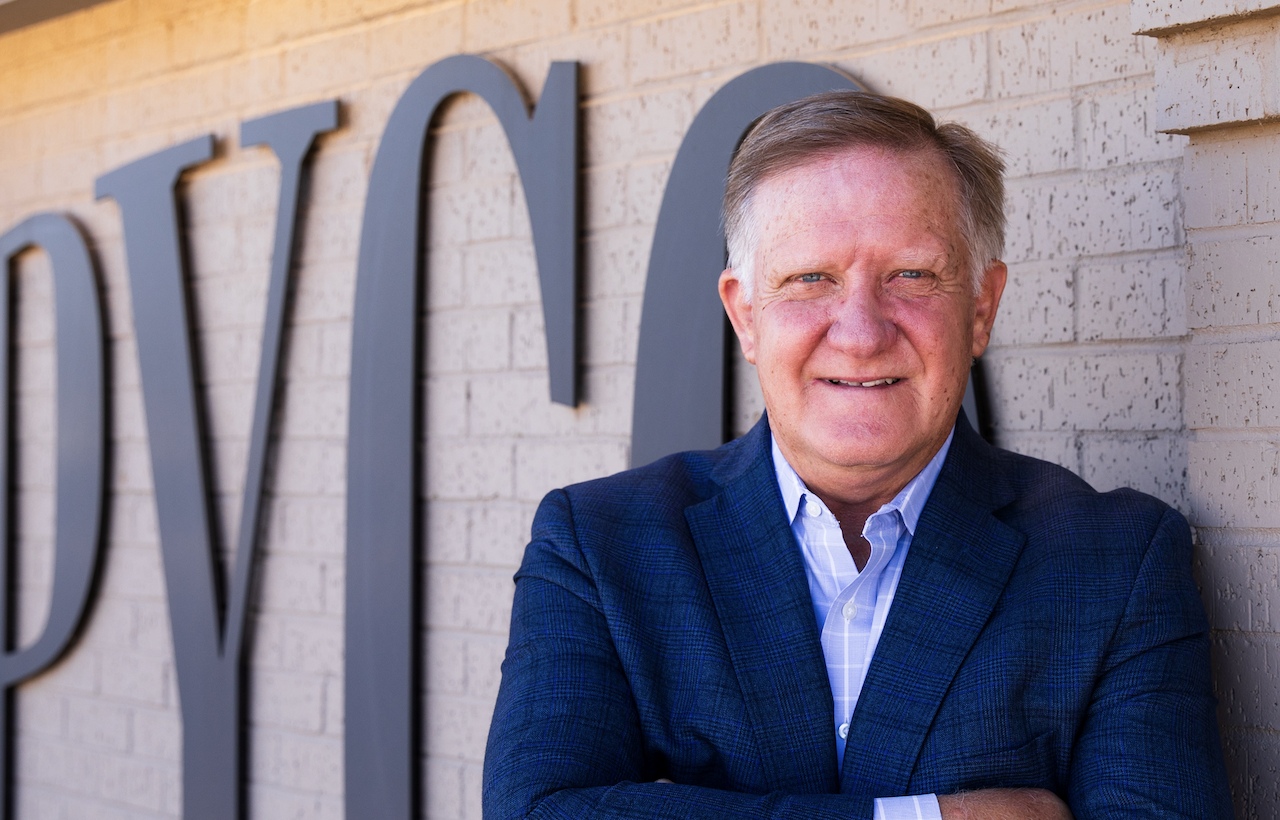 For most of us, September 30 will be just another day. For Robert Lacy, it will mark the last time he walks through PYCO’s front doors as President and CEO.
“I never saw this day coming,” Lacy chuckled, meaning he never saw himself as CEO of the largest cottonseed processing facility serving the southern United States. “People put me everywhere I’ve been. I’ve made it there because someone believed in me,” he said. “I just showed up and worked.”
Lacy’s office is filled with memories and accomplishments from his storied career, yet he takes credit for none of it.
Where It All Began
Like many good leaders, Lacy got his start in the field. Growing up on a cotton, milo, and corn farm in Hart, Texas, laid the foundation for the rest of his career. He learned valuable lessons from childhood responsibilities, namely hoeing and later “tromping” cotton in a cotton trailer during harvest season.“That w as where I got my start in the cotton industry, was hoeing cotton,” he said. “I got my first promotion when I was about 10 or 12, and dad finally let me on the tractor.”
While Lacy would come back to the cotton industry a few years later, he spent his high school and college years in New Mexico, graduating from Eastern New Mexico University. After returning home to Texas, he sold life insurance to college students who, Lacy says, didn’t want any such thing, but a job was a job until he found his way back into the industry.
“I just needed a job – I needed to start somewhere,” he explained, “but, luckily, one of my relatives was at Paymaster on 50th street in Lubbock, working the scales while he was going to college. When he left to go to vet school in 1984, I took over his job.”
Over the six years he worked at Paymaster, Lacy was promoted to the sales department and experienced not only a hostile takeover, but also the company being sold twice. When the next opportunity came, he left Paymaster on a Friday afternoon and started at PYCO the following Monday in a sales position.
“Basically, I would set up trucks, sell meal, hulls, and lint to whoever called in,” Lacy said. “We had customers calling in from everywhere.”
As the years passed, opportunities kept coming across Lacy’s desk. He later served as Vice President of Marketing for PYCO and learned valuable leadership lessons from former PYCO CEO Gail Kring, who retired in 2015. One lesson was to always remember who the company’s owners are. As a federated cooperative, cotton gins own PYCO.
“The best lesson I ever learned was that you are never too good to go to an annual meeting. Over my entire career, I’ve attended approximately 700 co-op meetings across 36 years. That’s where you get to know the farmers and the gin employees. One of the biggest things you can do is just be there with them.”
When Gail Kring was CEO, PYCO generated over $80 million in revenue from a single crop’s production (spread over a few years from 2010 to 2012). All the conditions were right: there was a bumper crop, plenty of seed to sell, and the right people to make it happen.
“Over those few years, we made $80 million. It might look easy, but I can assure you it’s not,” Lacy explained. “It was just one of those years where everything fell into place. We had a big crop and a lot of seed, which we sold and made money on. Unfortunately, after that, we had a few short crops and less seed.”
The record year gave the PYCO team the windfall needed to weather the less-than-desirable crop years that followed.
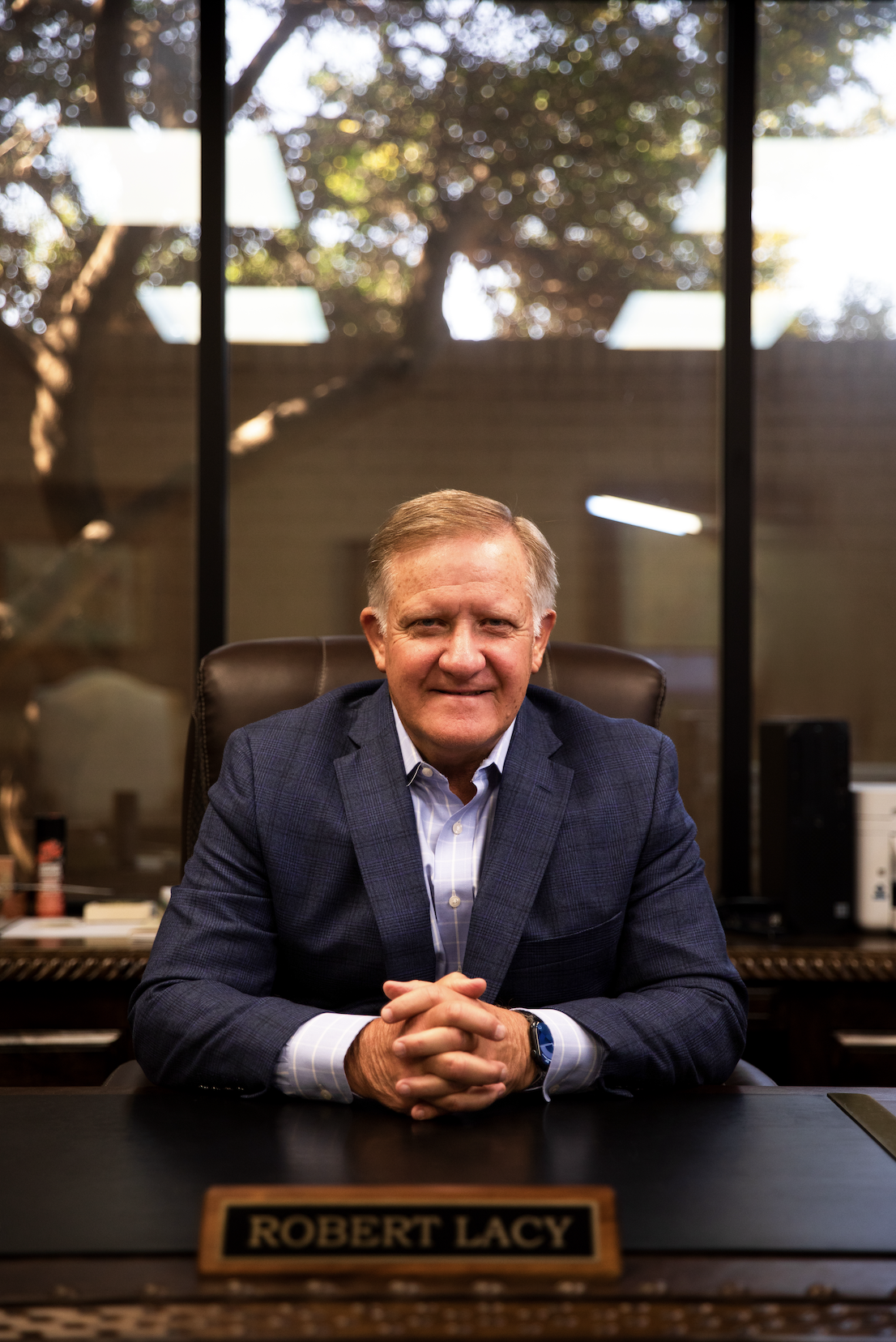 11 Years as President and CEO
By the time he was appointed CEO, Lacy had been mentored by the best in the business. He says the job was less about the title than about caring for many more people and rising to that responsibility.
“When it was time to transition, I felt like I had done a lot of the work before, but I certainly didn’t have that level of pressure and stress,” Lacy expressed. “I feel like I have just been a regular guy all these years, and then when they promoted me to be the President and CEO, I thought ‘that’s pretty special.’ It was something I wanted, but it wasn’t something I pressed for. They trusted me enough to put me in that job, and that felt pretty good.”
While Lacy’s title changed, his approach to business remained the same. Innovation, efficiency, and other milestones mattered, but caring for his team came first. Positive results were often a byproduct of everyone “pulling the rope” in the same direction.
“I always talk about pulling the rope in the same direction. We’re all on the same side. We’re all in this together. It’s not all me; it’s not all them,” he said. “If we don’t work together, it won’t work. We’re all in it together, the good or the bad. We formed a team we trusted. Our team is a family.”
Even then, Lacy and his team have kept the long-term viability of the company in mind for their gin owners, linking short-term success to future stability.
“The world’s going to change, and if you don’t change, you’re going to be behind,” he said. “Take care of your owners. That’s what it’s all about in the co-op world.”
Over the course of his tenure as CEO, Lacy brought employees together regardless of position. He fostered trust and stewardship by hiring top talent, trusting them, and delivering high-quality service to PYCO’s customers, reinforcing the values that guided the company.
The Joint Venture
After a few drought years, Lacy’s leadership skills were put to the test when PYCO and ADM (Archer Daniels Midland Company), a cottonseed processor in Lubbock and one of PYCO’s competitors, entered a joint venture in 2025. For both teams, the move was about ensuring future service for their customers, members, and stakeholders. The new venture, Plainsman Company, is majority-owned by PYCO and is led by a six-member board, with each company represented equally.
“I’ll be honest with you, that was probably one of the scariest things I’ve ever been through – creating a joint venture with one of your biggest competitors in the industry,” he said. “It was unprecedented. As we explored that project, we saw that there was a need for it for both parties.”
When Lacy started working in the cotton industry, there were 54 cottonseed processing facilities in the U.S. Today, there are only five. Mergers and joint ventures are now more commonplace due to financial constraints and increased efficiency requirements.
“You know, probably the biggest challenge in our industry is drought. There are other things like loss of farmland, but we used to produce anywhere from five to seven million bales of cotton, and recently we have gotten as low as two million,” Lacy explained. “I’ve learned over the years that you must adapt the size of your processes. You can’t control the crop size. You can’t control the drought, but you can control how efficient you are.”
This joint venture is not just about PYCO or ADM’s survival. Ultimately, it is about helping shape the future of the entire cotton industry, extending the impact beyond the two companies.
“That’s why we did it – so we could get money back to those people. Somebody’s got to farm that land, and that’s what I think the regionals are here to provide, that liquidity so people can stay on the farm,” he expressed. “Whether it’s going to be sons and daughters or friends or cousins, or someone that comes right out of high school and gets an opportunity to farm – that’s what it’s going to take. We need to be there to help them keep going.”
Faith for the Future
No matter what challenge his career threw at him, Lacy said every single step in the journey was worth it to further the future of the cotton industry and take care of the people within it.
“That’s what made it worthwhile,” he said. “The people I’ve met and the places I’ve been, and the things I’ve been blessed to do.”
As the retiring CEO leaves his office and closes the door, he passes on his legacy to PYCO, Plainsman, and the next generation of leaders in the cottonseed industry.
“Keep your head down and do your job. It will come to you because people will notice. It’s not about me. It’s more about what we are here for. We are here for the members, and we’re here to do a job.”
While he may no longer be in the office, Robert Lacy’s impact on the industry and beyond will last. He leaves the business with the same attributes he held at the beginning: gratitude for where he’s been and faith in those charging into the future. His legacy isn’t measured in dollars, but rather in the foundation he has laid: one of exemplary stewardship, trust, and service.
In retirement, he plans to spend more time on the golf course and on the ranch with his wife, Karyn, daughter Krysta, son Ryan and his wife Taylor, and grandchildren Blakely and Sawyer.